Best AI Patent Analysis Software in 2026
November 17, 2025

Patent analysis sits at the center of modern IP practice. Whether a team is preparing for prosecution, evaluating a competitor portfolio, assessing litigation risk, or aligning R&D with white-space opportunities, the quality of the analysis shapes the quality of the decision.
The work has traditionally been manual: reviewing specifications, comparing claim sets, checking prosecution histories, mapping prior art, and pulling insights from separate databases. That process is slow, and it often forces teams to rebuild context each time the work moves from search to drafting, prosecution, litigation, or portfolio review.
AI-powered patent analysis tools can reduce that friction. The strongest platforms break down claim structure, surface relevant prior art, map claims to evidence, compare related assets, and generate citation-backed outputs that attorneys can verify.
In a market defined by rising filing volumes, faster innovation cycles, and tighter IP budgets, patent analysis tools are becoming a practical requirement for teams that need to move faster without losing control of the work.
Below is a breakdown of the top patent analysis tools in 2026, with a focus on workflow coverage, claim-level analysis, source traceability, security, and fit for different IP teams.
Key Takeaways:
- Patent analysis tools help IP teams evaluate claim scope, prior art, prosecution history, portfolio coverage, and competitive risk with less manual review.
- The strongest platforms go beyond search results. They provide claim-level mapping, citation-backed outputs, and analysis attorneys can verify.
- Patent analysis is most valuable when it connects to downstream workflows such as prosecution, invalidity, infringement, FTO, portfolio review, and licensing strategy.
- General AI tools can help with summarization or early research, but they typically lack patent-specific structure, source traceability, and workflow continuity.
- Patlytics is built for teams that need patent analysis connected across the full lifecycle, from search and claim review to enforcement and portfolio strategy.
What is AI Patent Analysis Software?
A patent analysis tool helps attorneys, IP teams, and R&D organizations evaluate patents more efficiently and consistently. These platforms support work such as claim review, prior art analysis, prosecution history review, portfolio assessment, competitor monitoring, and patent-to-product mapping.
At a basic level, patent analysis software helps teams understand what a patent covers, how strong the claims may be, which references are relevant, and how the asset fits within a broader portfolio or competitive landscape.
The best patent analysis tools do more than summarize documents or return search results. They help IP teams:
- Understand claim scope and structure faster
- Identify relevant prior art and link it to specific claim language
- Evaluate patent strength, weaknesses, and potential invalidity issues
- Compare related patents across families, competitors, and technology areas
- Identify white-space opportunities with clearer portfolio context
- Generate citation-backed analysis that attorneys can verify
- Connect legal, R&D, and business teams around the same evidence
The Best AI Patent Analysis Software in 2026
For this list, we evaluated tools based on how well they support real patent analysis workflows. That includes claim-level review, prior art context, prosecution history visibility, portfolio and competitive analysis, source traceability, workflow coverage, security posture, and fit for law firm, in-house, and R&D teams.
We prioritized platforms built specifically for patent work over general-purpose AI tools. We also considered publicly available product documentation, customer proof points, user reviews where available, security claims, and how clearly each platform connects analysis to downstream workflows such as invalidity, infringement, FTO, prosecution, and portfolio strategy.
The goal is not to identify the tool with the longest feature list. It is to identify which platforms help patent professionals move from raw patent data to reviewable, decision-ready analysis.
1. Patlytics: The Most Complete Patent Analysis Platform

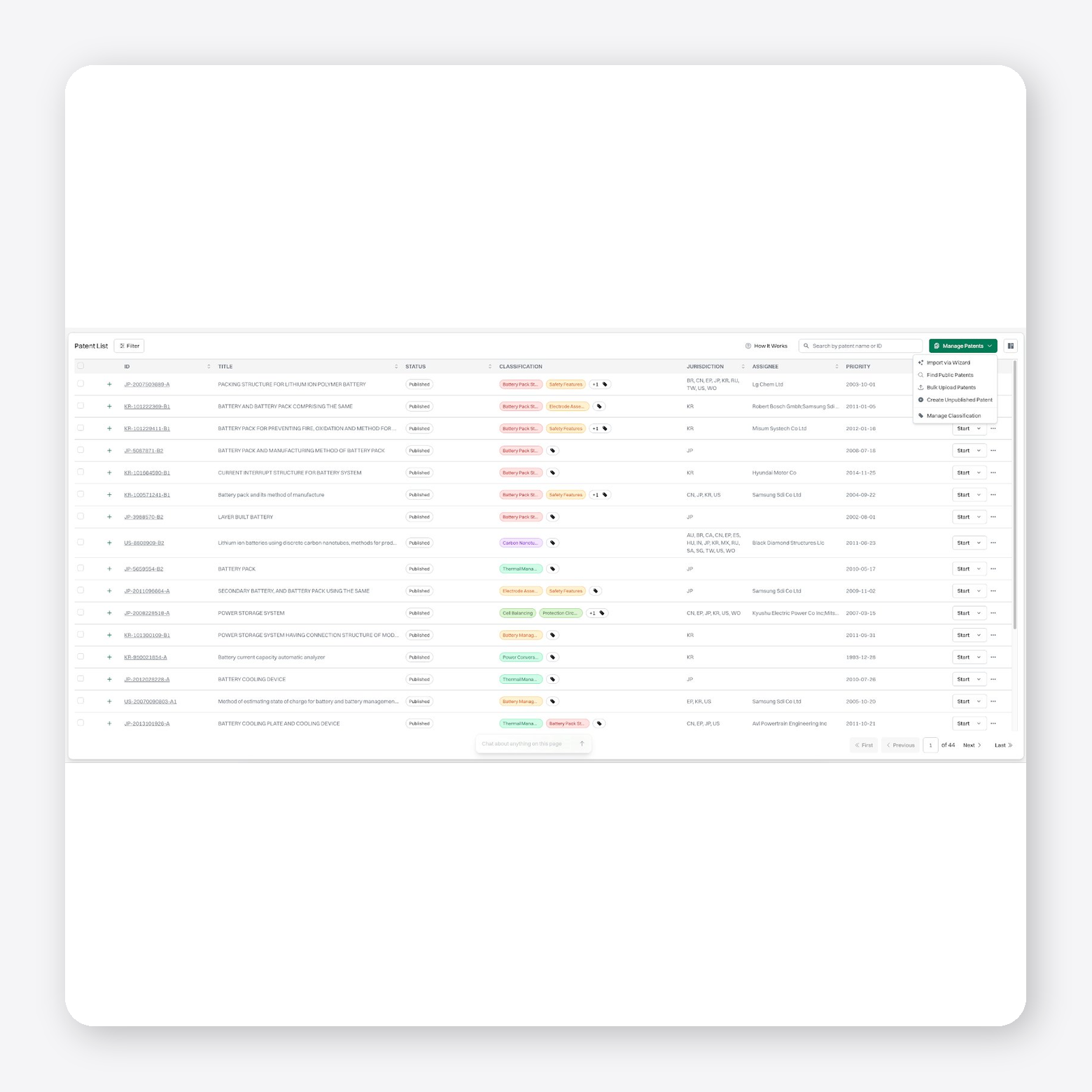
Patlytics is an AI-native patent intelligence platform built for teams that need analysis across the full patent lifecycle. It brings claim-level analysis, prior art review, prosecution insights, infringement detection, invalidity analysis, FTO, claim charting, portfolio pruning, and patent classification into one connected environment.
For patent professionals, the value is not just faster review. Patlytics links analysis to source material so attorneys can verify outputs, evaluate claim scope, and carry context into downstream workflows. That matters when a prior art search needs to become an invalidity chart, when claim analysis needs to support infringement review, or when portfolio decisions depend on the strength of specific assets.
Patlytics is also built for enterprise IP work. The platform is SOC 2 Type 2, ISO 27001, and ISO 42001 certified; customer data is encrypted in transit and at rest, segregated, and not used to train models.
Features:
- Automated Claim Breakdown: Transforms dense claim sets into structured, easy-to-understand hierarchies. Highlights key terms and identifies dependencies instantly.
- AI-Enhanced Claim Interpretation: Provides clear explanations of what each limitation covers, flags potential ambiguities, and helps analysts evaluate scope more strategically.
- Contextual Prior Art Surfacing: Automatically identifies highly relevant prior art using multimodal similarity models, citation networks, and structural comparison.
- Prosecution History Summaries: Converts office actions, amendments, and citations into readable narrative insights, making it easy to understand how claims evolved.
- Portfolio Intelligence: Shows how a given patent fits into larger families, competitor filings, citation networks, and technical clusters.
- Unified Workspace: All analysis, including comments, reports, comparisons, and summaries, lives in one environment that can be shared across teams.
Pricing: Custom pricing. Contact Patlytics for a demo and quote.
See what citation-backed patent analysis looks like in practice.
Compare prior art, claims, and portfolio signals in one AI-native patent platform built for attorney review. Explore Patlytics Patent Analysis
2. IP Copilot: Best for Lightweight Invention Capture and Summarization

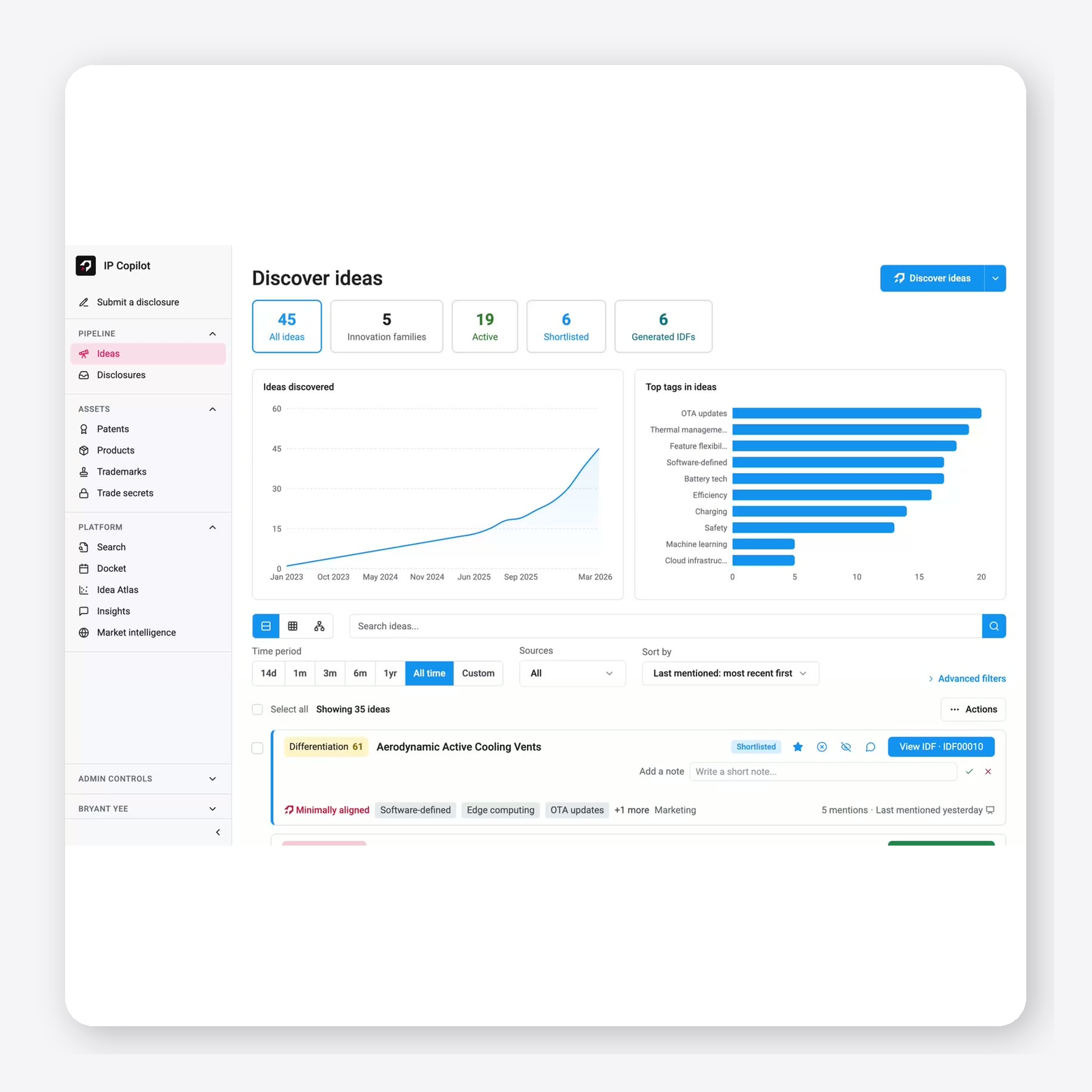
IP Copilot is designed around invention capture and IP workflow support. Its public positioning emphasizes helping organizations discover ideas from tools engineers already use, including Slack, Jira, Confluence, GitHub, Fireflies, and other systems. For patent analysis, IP Copilot appears best suited to early-stage intake, disclosure organization, and filing decision support. It may be useful for teams trying to identify inventions earlier in the R&D workflow, but it is not positioned as a full patent analysis platform for claim charting, invalidity, infringement, prosecution history review, or portfolio-level claim mapping.
Features:
- Invention discovery and intake: Captures potential inventions from engineering and collaboration tools.
- Disclosure workflow support: Helps structure ideas into invention disclosure materials and manage early IP review.
Pricing: Not publicly listed. Contact vendor for pricing.
3. DeepIP: Best for Drafting and Prosecution Assistance
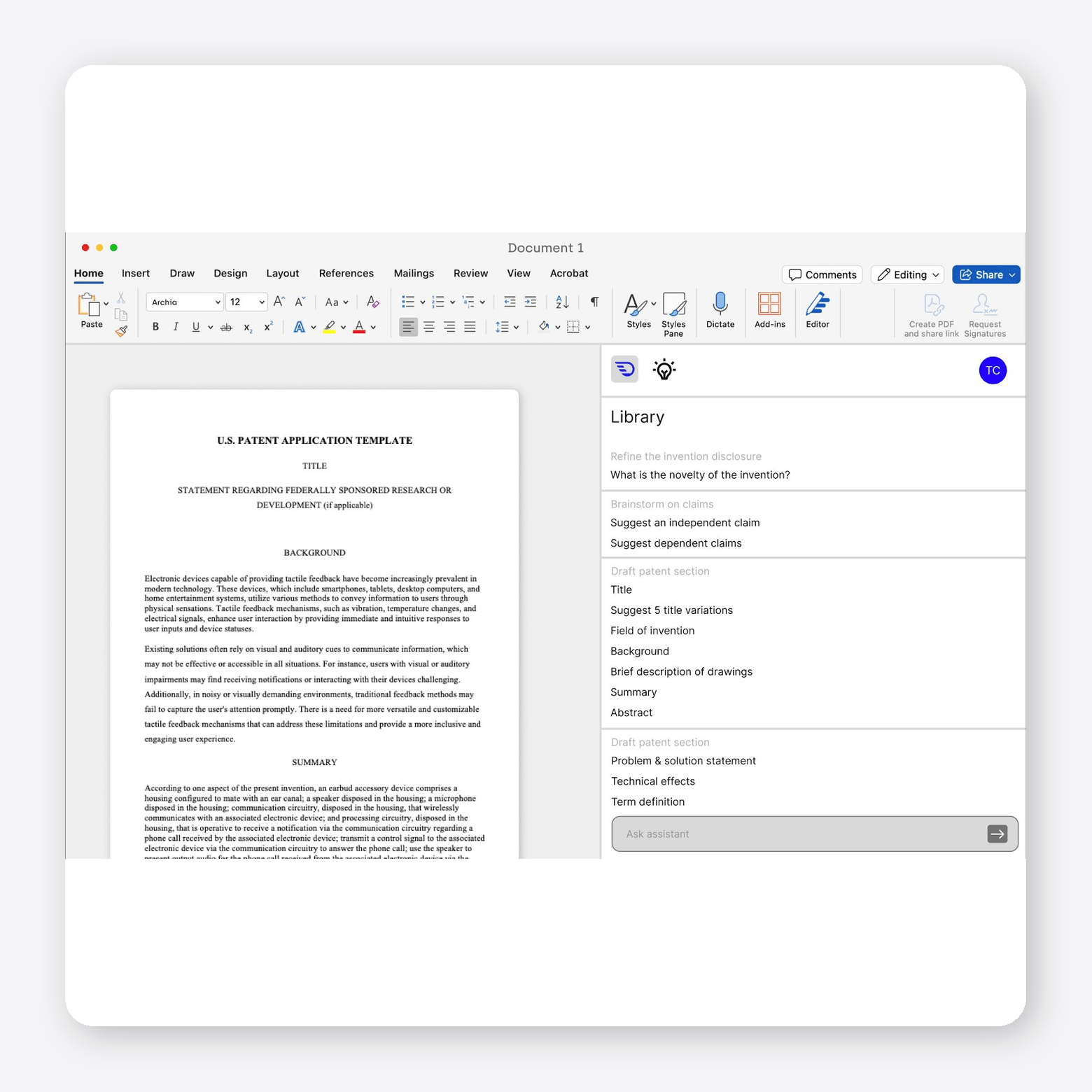
DeepIP is an AI platform for patent professionals that supports drafting, review, prosecution, prior art analysis, and office action workflows. It is positioned around ease of adoption, including integration with Microsoft Word and support for practitioners working in familiar drafting environments. DeepIP can support patent analysis where it intersects with drafting and prosecution, such as claim review, novelty analysis, prior art review, and office action preparation. It is a stronger fit for teams focused on drafting and prosecution workflows than for teams that need integrated infringement analysis, claim charting, portfolio pruning, and patent-to-product mapping in the same system.
Features:
- Drafting and prosecution support: Assists with application drafting, amendment suggestions, office action responses, and prior art review.
- Word-based workflow: Integrates with Microsoft Word for teams that want AI support inside existing drafting processes.
Pricing: Custom pricing. Public pricing is not generally listed; third-party software listings describe DeepIP pricing as custom.
4. Solve Intelligence: Best for Early Drafting Support and Prosecution Support

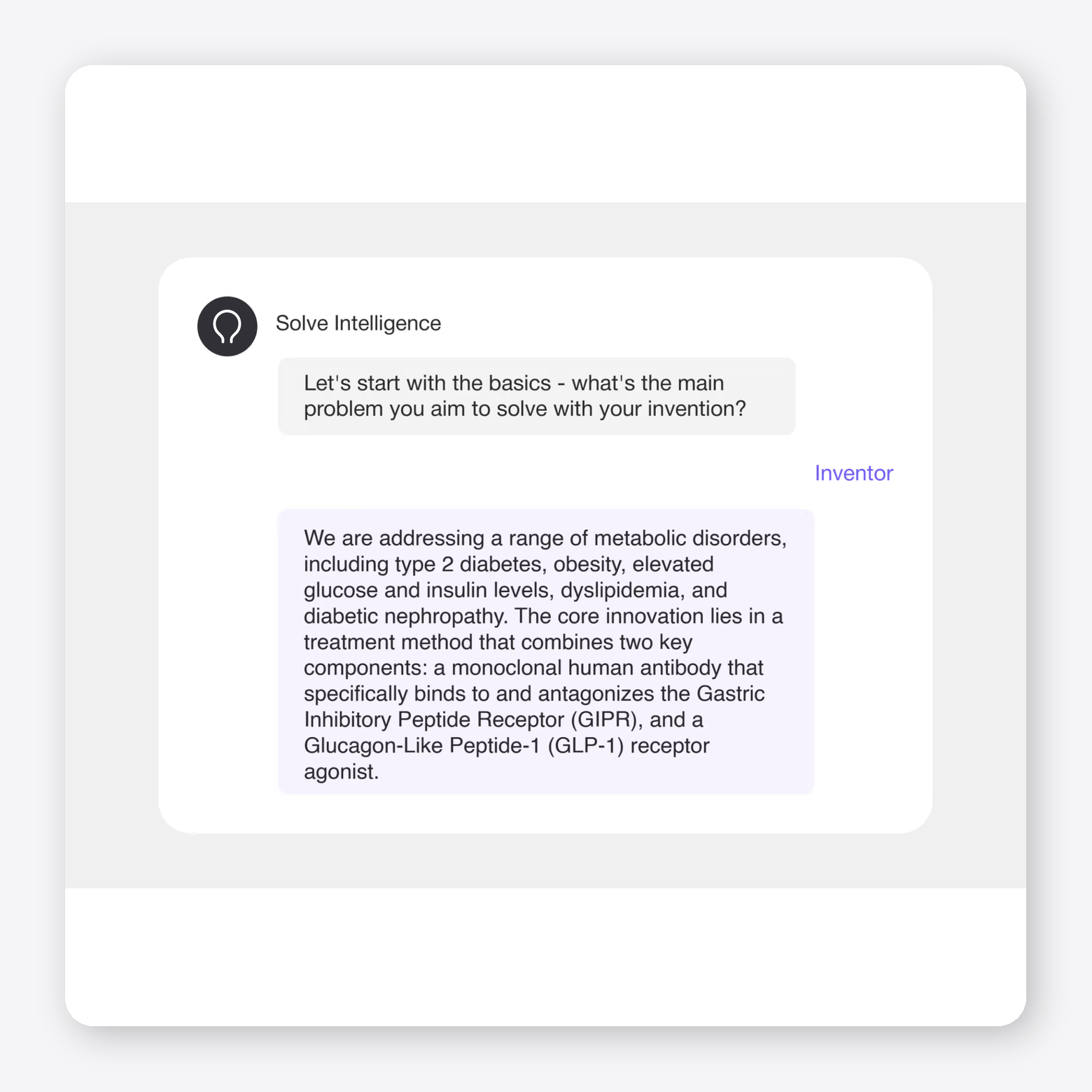
Solve Intelligence is an AI patent platform focused on helping legal professionals draft patent applications and handle prosecution work. Its public positioning emphasizes an in-browser document editor, patent drafting, office action support, and workflow improvements for patent professionals. The platform can support analysis where it connects to drafting and prosecution, including cited outputs, claim charting, and office action workflows. It is a strong drafting-centered tool, but teams looking for broader patent analysis across search, invalidity, FTO, infringement, portfolio review, and pruning may need a more lifecycle-oriented platform.
Features:
- Patent drafting support: Helps generate and refine patent application content in an AI-assisted drafting environment.
- Prosecution workflows: Supports office action response preparation, invention disclosure workflows, and related prosecution tasks.
Pricing: Custom pricing. Solve Intelligence does not publicly list standard pricing; third-party pricing analyses describe the model as contact-for-pricing or enterprise-oriented.
5. AcclaimIP (Anaqua): Best for Patent Search and Competitive Landscape Review
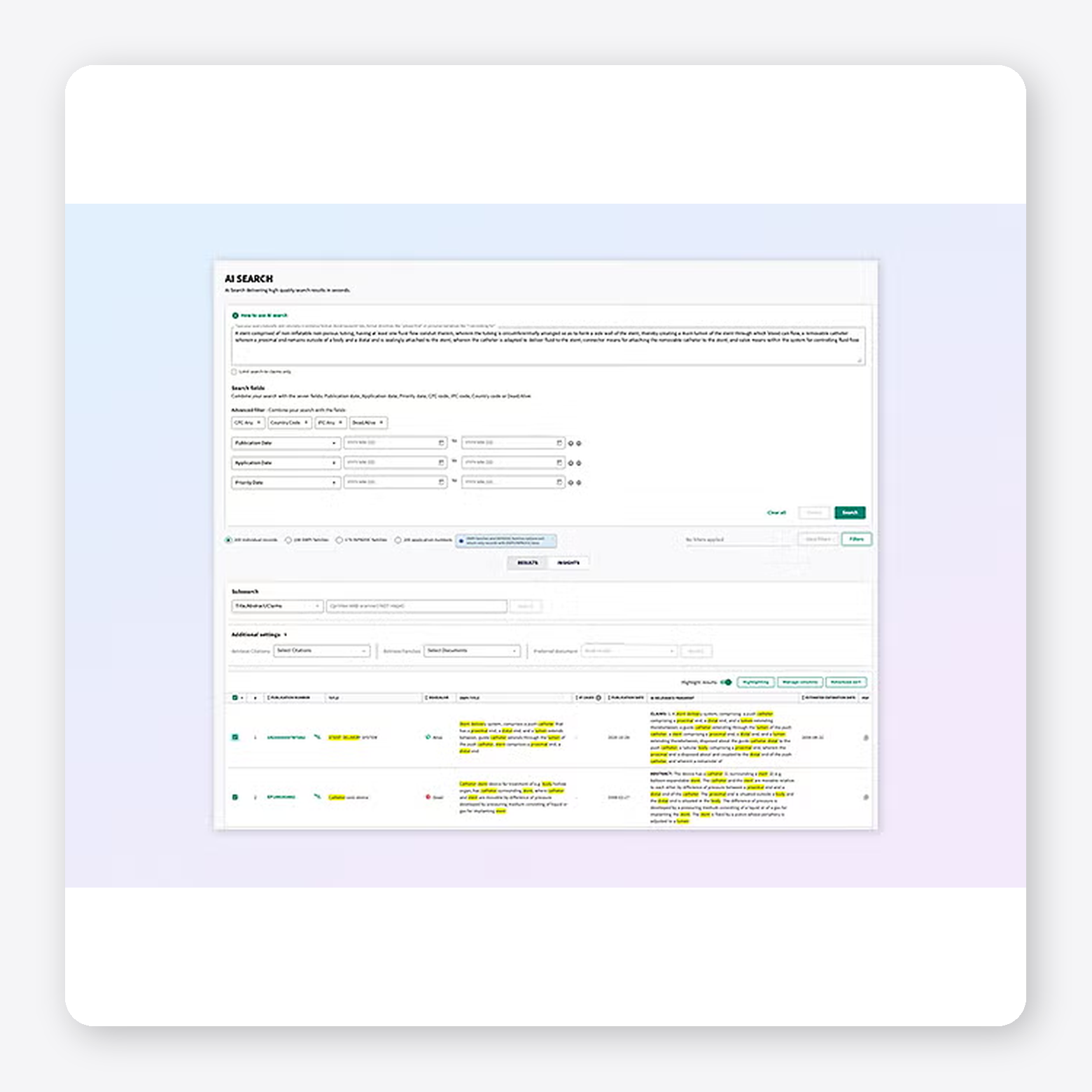
AcclaimIP is a patent search and analytics platform from Anaqua. It is designed to help users search global patent data, assess patentability, evaluate freedom to operate, and review competitive patent landscapes. Anaqua describes AcclaimIP as covering more than 165 million patents worldwide. AcclaimIP is useful for search-driven analysis, competitive monitoring, and landscape review. It is not positioned as a full AI-native patent workflow platform for drafting, prosecution, claim chart generation, infringement analysis, invalidity workflows, and portfolio pruning in one system.

Features:
- Patent search and analytics: Supports global patent searching, filtering, and competitive landscape review.
- Portfolio and landscape insights: Helps users analyze patent sets, identify trends, and support business or innovation strategy.
Pricing: Not publicly listed. Free trial and demo options are available through Anaqua/AcclaimIP.
6.Derwent Patent Intelligence (Clarivate): Best for Curated Patent Data and Search Analytics

Derwent Patent Intelligence is Clarivate’s patent search and analytics offering. Its core strength is human-enriched patent data, including Derwent World Patents Index content and human-authored invention summaries. Clarivate positions Derwent as a platform for patent, innovation, and strategy decisions, supported by patent data, AI tools, and expert services. Derwent is a great fit for teams that rely heavily on curated patent data, structured search, competitive intelligence, and patent landscape analysis. It is less focused on unified patent workflows that connect drafting, prosecution, claim charting, infringement, invalidity, FTO, and portfolio pruning in one workspace.
Features:
- Curated patent intelligence: Uses human-enriched patent data and invention summaries to support search and analysis.
- Search and analytics workflows: Supports prior art searching, patentability review, FTO, competitive intelligence, and landscape analysis.
Pricing: Custom pricing. Contact Clarivate for details.
7. Patsnap: Best for IP and R&D Intelligence

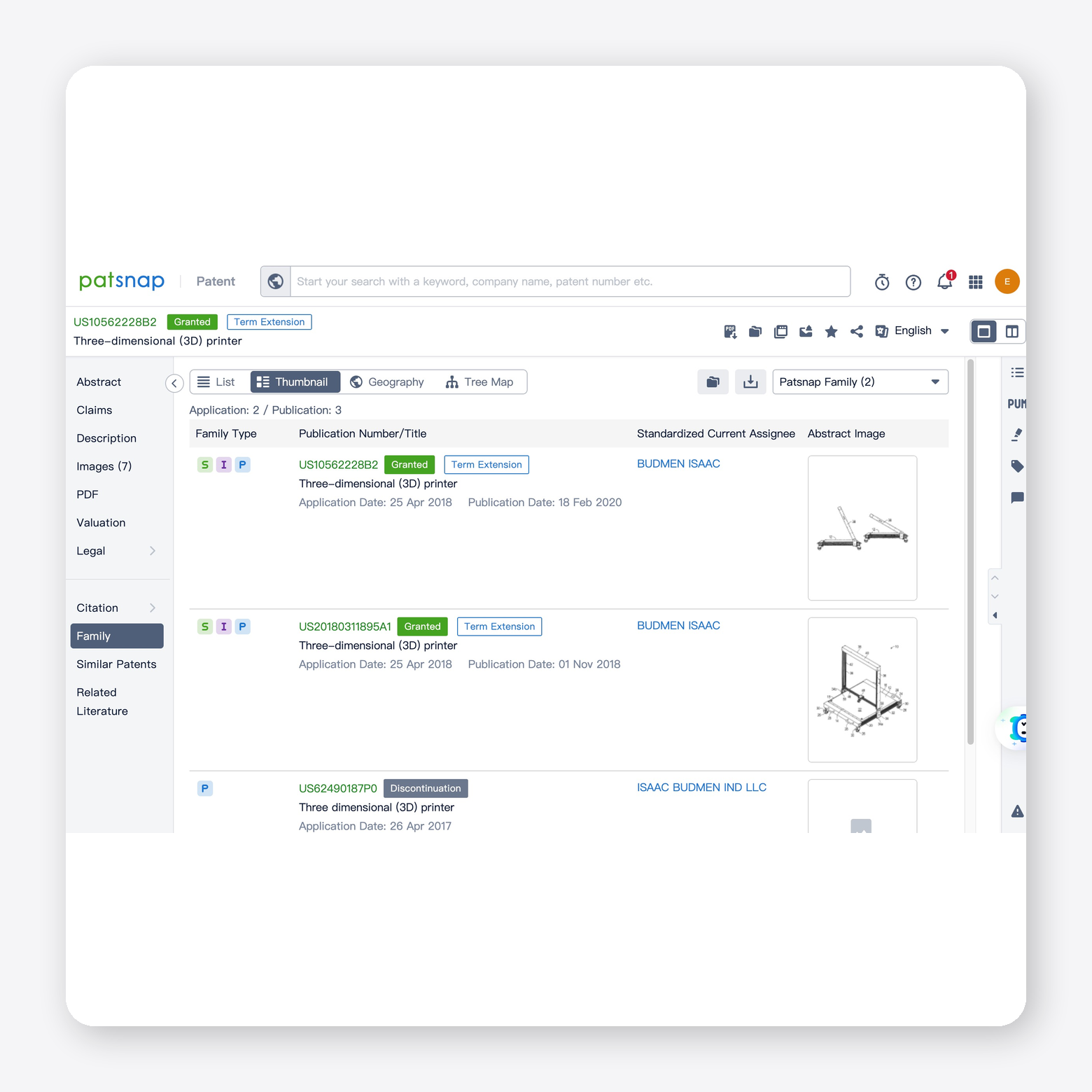
Patsnap is an innovation intelligence platform used by IP and R&D teams for patent analysis, technology monitoring, competitive intelligence, prior art search, and market insights. Patsnap’s public pricing page describes Standard and Premium plans for IP and R&D teams, with custom pricing available. The platform is strongest where patent analysis overlaps with R&D strategy and market intelligence. Teams needing integrated claim charting, prosecution workflows, invalidity, infringement, FTO, and portfolio pruning may need to evaluate how much of that work can happen inside Patsnap versus separate tools.
Features:
- Patent and innovation analytics: Helps teams analyze patents, technology areas, competitors, and R&D trends.
- AI-assisted search and monitoring: Supports patent search, analytics, monitoring, and broader innovation intelligence workflows.
Pricing: Standard and Premium plans are listed publicly, with pricing available through Patsnap sales.
8. Octimine (Dennemeyer): Best for AI Patent Search and Monitoring

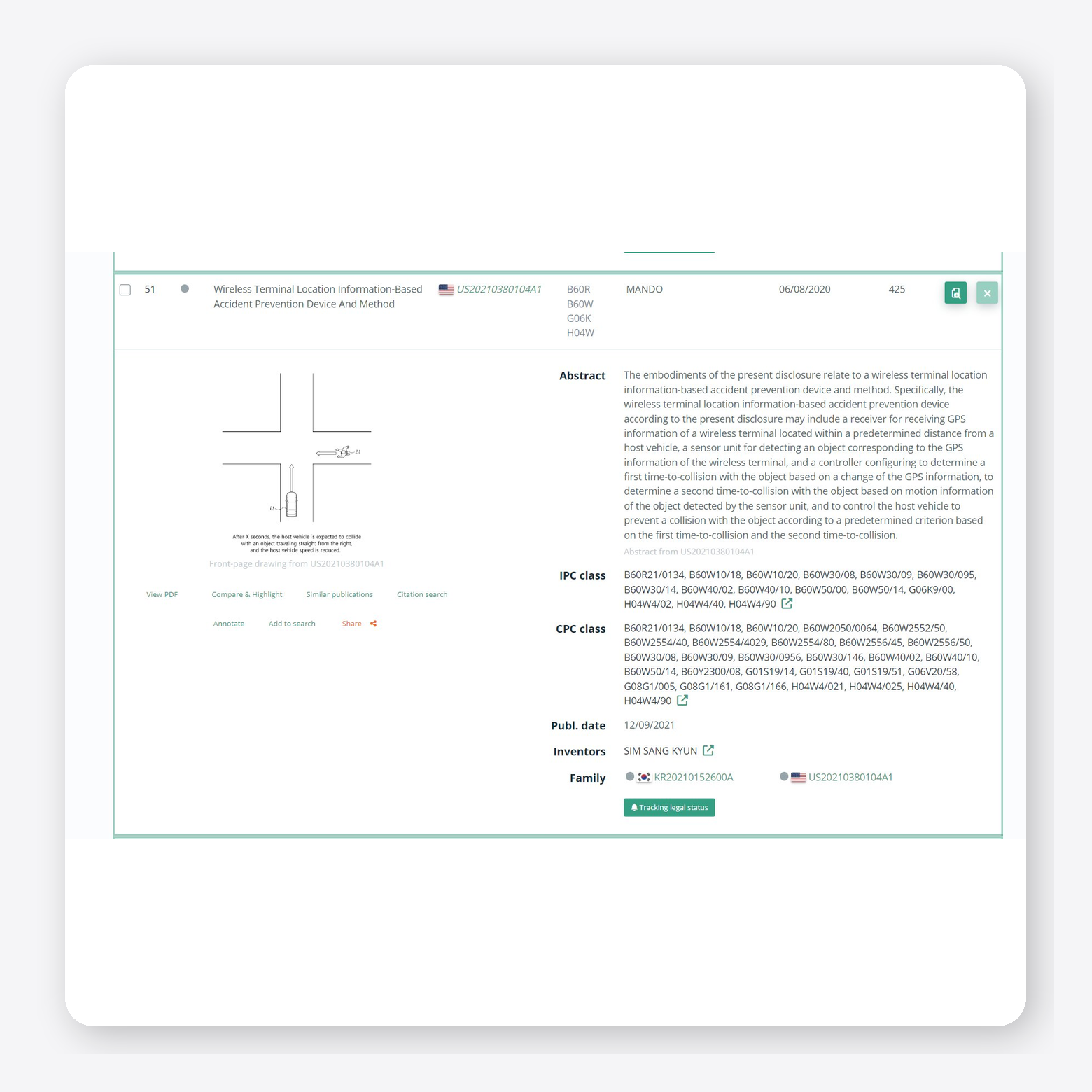
Octimine is Dennemeyer’s patent search, monitoring, and analytics platform. It combines AI-powered semantic search with traditional search methods and collaboration features. Public listings describe Octimine as supporting search, review, monitoring, analytics, annotations, and patent document management.
Octimine is a strong option for teams focused on prior art discovery, monitoring, and patent landscape awareness. It is less positioned as a full patent lifecycle platform for drafting, prosecution, claim charting, infringement, invalidity, FTO, and portfolio decision workflows.
Features:
- Semantic patent search: Uses AI-assisted search to compare disclosures, product descriptions, or technical text against patent data.
- Monitoring and collaboration: Supports patent monitoring, annotations, team workflows, and analytics.
Pricing: Custom pricing. Third-party sources describe Octimine pricing as quote-based or available through consultation.
What to Look for in a Patent Analysis Platform
The best patent analysis tools do more than surface documents. They help attorneys move from raw patent data to usable legal and technical analysis without rebuilding context at every step.
Historically, that work has been manual: reviewing specifications, comparing claim sets, checking prosecution histories, mapping prior art, and pulling insights from separate databases. That process is slow, duplicative, and risky. Each time the work moves from search to drafting, prosecution, litigation, FTO, or portfolio review, teams often have to reconstruct the same facts in a new tool.
A strong patent analysis platform should reduce that burden. It should preserve context, connect evidence to claims, and give attorneys a faster path to reviewable, defensible work product.
1. Claim-Level Breakdown and Structural Analysis
A strong patent analysis platform should break claims into specific limitations, distinguish independent and dependent claims, and show how claim elements relate to one another.
This matters because patent analysis starts with claim scope. Attorneys and technical teams need to understand what each claim requires before evaluating prior art, infringement risk, invalidity arguments, or portfolio value. A useful platform should make that structure clear without requiring the team to manually parse every claim from scratch.
2. AI-Assisted Claim Interpretation
Patent analysis tools should help teams understand how claim language may be read, where terms may be ambiguous, and which limitations require closer review.
This does not replace legal interpretation. It gives attorneys a structured starting point for evaluating claim scope, drafting risk, prosecution strategy, and downstream enforcement issues. The most useful tools support multiple possible readings and keep the attorney in control of the final interpretation.
3. Automated Prior Art Context
Prior art analysis should go beyond ranked search results. A strong platform should surface relevant patent and non-patent references, explain why they matter, and map them to specific claim language.
Look for tools that connect prior art to claim limitations, technical features, citation networks, and prosecution context. The goal is not just faster search. It is citation-backed analysis that attorneys can verify and use in prosecution, invalidity, FTO, or portfolio decisions.
4. Prosecution History Insights
A modern patent analysis platform should make prosecution history easier to review. That includes office actions, amendments, examiner reasoning, applicant arguments, and changes in claim scope over time.
This context is critical for both prosecution and litigation. Attorneys need to understand not only what the claims say now, but how they got there. Strong tools help teams identify key prosecution events, track narrowing amendments, and understand how prior arguments may affect future strategy. That can be especially important for litigation, due diligence, continuation strategy, and portfolio review.
5. Portfolio and Competitive Analysis
Patent analysis often extends beyond a single patent. IP teams need to understand families, technology clusters, competitor filings, white-space opportunities, and portfolio exposure across jurisdictions and business units.
A strong platform should help teams classify assets, compare related patents, identify coverage gaps, and connect portfolio analysis to business decisions. The best tools do not isolate portfolio dashboards from claim-level work. They connect portfolio views to the underlying patents, claims, evidence, and competitive context. That connection is what helps attorneys and IP leaders move from high-level visibility to practical decisions about filing, maintaining, licensing, enforcing, or pruning assets.
6. Citation-Backed Outputs and Review Controls
For patent professionals, unsupported AI output is not useful. Every analysis should be tied back to source material: claim language, patent documents, prior art, file histories, product evidence, or portfolio data.
Citation-backed outputs give attorneys a clear review path. They also reduce the risk of relying on unsupported summaries, incomplete mappings, or generated text that cannot be verified.
This is one of the most important differences between general AI tools and patent-specific analysis platforms. Patent work requires traceability. A platform should show its work so attorneys can confirm the basis for every conclusion before using it in a filing, opinion, negotiation, or litigation matter.
7. Enterprise-Grade Security
Patent analysis involves unpublished applications, invention disclosures, technical documents, legal strategy, and confidential client information. Security should be a baseline requirement, not an afterthought.
Look for platforms with strong access controls, encryption, auditability, clear data-use policies, and recognized certifications. SOC 2 Type 2 and ISO 27001 should be table stakes; ISO 42001 is increasingly becoming the benchmark for AI management.
For law firms and in-house teams, the question is not only whether a tool is powerful. It is whether the tool can be used safely in high-stakes patent work involving confidential client or business information.
Putting Patent Analysis to Work in Your Workflow
Patent analysis has moved beyond manual reading and isolated search. Modern IP teams need to understand claim scope, evaluate prior art, review prosecution history, assess portfolio strength, and make decisions with evidence they can verify.
Point solutions can help with specific tasks. A drafting assistant may support application preparation. A search platform may surface references. A portfolio dashboard may show filing trends. But patent work rarely stops at one task. Search results need to inform claim analysis. Claim analysis may support invalidity, infringement, FTO, licensing, or prosecution strategy. Portfolio decisions often depend on the same underlying evidence.
The strongest platforms preserve that context as the work moves forward. They connect claims, references, file histories, product evidence, and portfolio data so attorneys are not rebuilding the same analysis in separate systems.
Patlytics brings those analysis layers together in one patent-specific platform. Teams can move from invention disclosure and prior art search to claim analysis, office action review, infringement detection, invalidity analysis, portfolio pruning, and competitive strategy with source-linked outputs at each step.
For teams with a narrow use case, a specialized tool may be enough. For law firms, in-house teams, and R&D organizations managing work across the patent lifecycle, the better standard is a platform that is verifiable, configurable, secure, and built for how patent work actually moves.
To see how Patlytics supports patent analysis across the full lifecycle, request a demo.
Patent Analysis Tools FAQs
What is patent analysis software?
Patent analysis software helps IP teams evaluate patents, claims, prior art, prosecution history, competitors, and portfolio coverage. It is used to understand claim scope, assess patent strength, identify risks, evaluate white space, and support decisions around prosecution, litigation, licensing, FTO, and portfolio strategy.
The best patent analysis tools provide more than document summaries. They connect analysis to source material, map claims to evidence, and give attorneys reviewable outputs they can verify.
What is the difference between patent search software and patent analysis software?
Patent search software helps users find relevant patents, publications, and prior art. Patent analysis software goes further by interpreting those results, mapping them to claims, identifying risks, comparing portfolios, and supporting decisions such as invalidity, FTO, infringement, and portfolio strategy. The strongest patent analysis platforms connect search results to downstream workflows, rather than treating search as a standalone task.
Can AI analyze patent claims?
Yes. AI can analyze patent claims by breaking them into limitations, comparing those limitations against prior art or evidence of use, and generating structured outputs such as claim charts, invalidity analysis, infringement analysis, or FTO support. However, AI claim analysis still requires attorney review. Claim scope, legal interpretation, amendment strategy, and final conclusions remain practitioner decisions. Patlytics is designed around that principle: the AI does the work, and the attorney makes the call.
What is the best patent analysis tool for law firms vs. in-house teams?
For law firms, the best patent analysis tool is one that produces citation-backed, defensible work product across matters such as invalidity, infringement, claim charting, office actions, and drafting. For in-house teams, the best tool also needs portfolio visibility, FTO support, competitive intelligence, and scalable review across large patent sets. Patlytics is a strong fit for both because it combines drafting, prosecution, infringement, invalidity, FTO, SEP, and portfolio analysis in one patent-specific platform, while keeping attorney judgment central.
Can AI do patent search?
Yes. AI can support patent search by analyzing technical concepts, claim language, patent classifications, citation networks, and non-patent literature to surface relevant references.
But AI search still requires review. Patent attorneys and search professionals need to verify relevance, refine queries, assess claim mappings, and determine how each reference affects patentability, invalidity, FTO, or infringement analysis.
The strongest tools connect search results directly to downstream workflows, such as claim charts, prior art analysis, office action responses, invalidity review, and portfolio decisions.
What should I look for when choosing patent analysis software?
Look for a platform that produces analysis attorneys can verify. The most important capabilities include claim-level mapping, citation-backed outputs, prior art context, prosecution history review, portfolio and competitive analysis, integrated charting, workflow configurability, and enterprise-grade security.
For serious patent work, avoid tools that only summarize documents or return ranked lists of results. The better standard is whether the platform connects search, claims, evidence, and workflow decisions in a way that supports attorney review and judgment.

Best AI Patent Analysis Software in 2026
Patent analysis sits at the center of modern IP practice. Whether a team is preparing for prosecution, evaluating a competitor portfolio, assessing litigation risk, or aligning R&D with white-space opportunities, the quality of the analysis shapes the quality of the decision.
The work has traditionally been manual: reviewing specifications, comparing claim sets, checking prosecution histories, mapping prior art, and pulling insights from separate databases. That process is slow, and it often forces teams to rebuild context each time the work moves from search to drafting, prosecution, litigation, or portfolio review.
AI-powered patent analysis tools can reduce that friction. The strongest platforms break down claim structure, surface relevant prior art, map claims to evidence, compare related assets, and generate citation-backed outputs that attorneys can verify.
In a market defined by rising filing volumes, faster innovation cycles, and tighter IP budgets, patent analysis tools are becoming a practical requirement for teams that need to move faster without losing control of the work.
Below is a breakdown of the top patent analysis tools in 2026, with a focus on workflow coverage, claim-level analysis, source traceability, security, and fit for different IP teams.
Key Takeaways:
- Patent analysis tools help IP teams evaluate claim scope, prior art, prosecution history, portfolio coverage, and competitive risk with less manual review.
- The strongest platforms go beyond search results. They provide claim-level mapping, citation-backed outputs, and analysis attorneys can verify.
- Patent analysis is most valuable when it connects to downstream workflows such as prosecution, invalidity, infringement, FTO, portfolio review, and licensing strategy.
- General AI tools can help with summarization or early research, but they typically lack patent-specific structure, source traceability, and workflow continuity.
- Patlytics is built for teams that need patent analysis connected across the full lifecycle, from search and claim review to enforcement and portfolio strategy.
What is AI Patent Analysis Software?
A patent analysis tool helps attorneys, IP teams, and R&D organizations evaluate patents more efficiently and consistently. These platforms support work such as claim review, prior art analysis, prosecution history review, portfolio assessment, competitor monitoring, and patent-to-product mapping.
At a basic level, patent analysis software helps teams understand what a patent covers, how strong the claims may be, which references are relevant, and how the asset fits within a broader portfolio or competitive landscape.
The best patent analysis tools do more than summarize documents or return search results. They help IP teams:
- Understand claim scope and structure faster
- Identify relevant prior art and link it to specific claim language
- Evaluate patent strength, weaknesses, and potential invalidity issues
- Compare related patents across families, competitors, and technology areas
- Identify white-space opportunities with clearer portfolio context
- Generate citation-backed analysis that attorneys can verify
- Connect legal, R&D, and business teams around the same evidence
The Best AI Patent Analysis Software in 2026
For this list, we evaluated tools based on how well they support real patent analysis workflows. That includes claim-level review, prior art context, prosecution history visibility, portfolio and competitive analysis, source traceability, workflow coverage, security posture, and fit for law firm, in-house, and R&D teams.
We prioritized platforms built specifically for patent work over general-purpose AI tools. We also considered publicly available product documentation, customer proof points, user reviews where available, security claims, and how clearly each platform connects analysis to downstream workflows such as invalidity, infringement, FTO, prosecution, and portfolio strategy.
The goal is not to identify the tool with the longest feature list. It is to identify which platforms help patent professionals move from raw patent data to reviewable, decision-ready analysis.
1. Patlytics: The Most Complete Patent Analysis Platform
Patlytics is an AI-native patent intelligence platform built for teams that need analysis across the full patent lifecycle. It brings claim-level analysis, prior art review, prosecution insights, infringement detection, invalidity analysis, FTO, claim charting, portfolio pruning, and patent classification into one connected environment.
For patent professionals, the value is not just faster review. Patlytics links analysis to source material so attorneys can verify outputs, evaluate claim scope, and carry context into downstream workflows. That matters when a prior art search needs to become an invalidity chart, when claim analysis needs to support infringement review, or when portfolio decisions depend on the strength of specific assets.
Patlytics is also built for enterprise IP work. The platform is SOC 2 Type 2, ISO 27001, and ISO 42001 certified; customer data is encrypted in transit and at rest, segregated, and not used to train models.
Features:
- Automated Claim Breakdown: Transforms dense claim sets into structured, easy-to-understand hierarchies. Highlights key terms and identifies dependencies instantly.
- AI-Enhanced Claim Interpretation: Provides clear explanations of what each limitation covers, flags potential ambiguities, and helps analysts evaluate scope more strategically.
- Contextual Prior Art Surfacing: Automatically identifies highly relevant prior art using multimodal similarity models, citation networks, and structural comparison.
- Prosecution History Summaries: Converts office actions, amendments, and citations into readable narrative insights, making it easy to understand how claims evolved.
- Portfolio Intelligence: Shows how a given patent fits into larger families, competitor filings, citation networks, and technical clusters.
- Unified Workspace: All analysis, including comments, reports, comparisons, and summaries, lives in one environment that can be shared across teams.
Pricing: Custom pricing. Contact Patlytics for a demo and quote.
See what citation-backed patent analysis looks like in practice.
Compare prior art, claims, and portfolio signals in one AI-native patent platform built for attorney review. Explore Patlytics Patent Analysis
2. IP Copilot: Best for Lightweight Invention Capture and Summarization
IP Copilot is designed around invention capture and IP workflow support. Its public positioning emphasizes helping organizations discover ideas from tools engineers already use, including Slack, Jira, Confluence, GitHub, Fireflies, and other systems. For patent analysis, IP Copilot appears best suited to early-stage intake, disclosure organization, and filing decision support. It may be useful for teams trying to identify inventions earlier in the R&D workflow, but it is not positioned as a full patent analysis platform for claim charting, invalidity, infringement, prosecution history review, or portfolio-level claim mapping.
Features:
- Invention discovery and intake: Captures potential inventions from engineering and collaboration tools.
- Disclosure workflow support: Helps structure ideas into invention disclosure materials and manage early IP review.
Pricing: Not publicly listed. Contact vendor for pricing.
3. DeepIP: Best for Drafting and Prosecution Assistance
DeepIP is an AI platform for patent professionals that supports drafting, review, prosecution, prior art analysis, and office action workflows. It is positioned around ease of adoption, including integration with Microsoft Word and support for practitioners working in familiar drafting environments. DeepIP can support patent analysis where it intersects with drafting and prosecution, such as claim review, novelty analysis, prior art review, and office action preparation. It is a stronger fit for teams focused on drafting and prosecution workflows than for teams that need integrated infringement analysis, claim charting, portfolio pruning, and patent-to-product mapping in the same system.
Features:
- Drafting and prosecution support: Assists with application drafting, amendment suggestions, office action responses, and prior art review.
- Word-based workflow: Integrates with Microsoft Word for teams that want AI support inside existing drafting processes.
Pricing: Custom pricing. Public pricing is not generally listed; third-party software listings describe DeepIP pricing as custom.
4. Solve Intelligence: Best for Early Drafting Support and Prosecution Support
Solve Intelligence is an AI patent platform focused on helping legal professionals draft patent applications and handle prosecution work. Its public positioning emphasizes an in-browser document editor, patent drafting, office action support, and workflow improvements for patent professionals. The platform can support analysis where it connects to drafting and prosecution, including cited outputs, claim charting, and office action workflows. It is a strong drafting-centered tool, but teams looking for broader patent analysis across search, invalidity, FTO, infringement, portfolio review, and pruning may need a more lifecycle-oriented platform.
Features:
- Patent drafting support: Helps generate and refine patent application content in an AI-assisted drafting environment.
- Prosecution workflows: Supports office action response preparation, invention disclosure workflows, and related prosecution tasks.
Pricing: Custom pricing. Solve Intelligence does not publicly list standard pricing; third-party pricing analyses describe the model as contact-for-pricing or enterprise-oriented.
5. AcclaimIP (Anaqua): Best for Patent Search and Competitive Landscape Review
AcclaimIP is a patent search and analytics platform from Anaqua. It is designed to help users search global patent data, assess patentability, evaluate freedom to operate, and review competitive patent landscapes. Anaqua describes AcclaimIP as covering more than 165 million patents worldwide. AcclaimIP is useful for search-driven analysis, competitive monitoring, and landscape review. It is not positioned as a full AI-native patent workflow platform for drafting, prosecution, claim chart generation, infringement analysis, invalidity workflows, and portfolio pruning in one system.
Features:
- Patent search and analytics: Supports global patent searching, filtering, and competitive landscape review.
- Portfolio and landscape insights: Helps users analyze patent sets, identify trends, and support business or innovation strategy.
Pricing: Not publicly listed. Free trial and demo options are available through Anaqua/AcclaimIP.
6.Derwent Patent Intelligence (Clarivate): Best for Curated Patent Data and Search Analytics
Derwent Patent Intelligence is Clarivate’s patent search and analytics offering. Its core strength is human-enriched patent data, including Derwent World Patents Index content and human-authored invention summaries. Clarivate positions Derwent as a platform for patent, innovation, and strategy decisions, supported by patent data, AI tools, and expert services. Derwent is a great fit for teams that rely heavily on curated patent data, structured search, competitive intelligence, and patent landscape analysis. It is less focused on unified patent workflows that connect drafting, prosecution, claim charting, infringement, invalidity, FTO, and portfolio pruning in one workspace.
Features:
- Curated patent intelligence: Uses human-enriched patent data and invention summaries to support search and analysis.
- Search and analytics workflows: Supports prior art searching, patentability review, FTO, competitive intelligence, and landscape analysis.
Pricing: Custom pricing. Contact Clarivate for details.
7. Patsnap: Best for IP and R&D Intelligence
Patsnap is an innovation intelligence platform used by IP and R&D teams for patent analysis, technology monitoring, competitive intelligence, prior art search, and market insights. Patsnap’s public pricing page describes Standard and Premium plans for IP and R&D teams, with custom pricing available. The platform is strongest where patent analysis overlaps with R&D strategy and market intelligence. Teams needing integrated claim charting, prosecution workflows, invalidity, infringement, FTO, and portfolio pruning may need to evaluate how much of that work can happen inside Patsnap versus separate tools.
Features:
- Patent and innovation analytics: Helps teams analyze patents, technology areas, competitors, and R&D trends.
- AI-assisted search and monitoring: Supports patent search, analytics, monitoring, and broader innovation intelligence workflows.
Pricing: Standard and Premium plans are listed publicly, with pricing available through Patsnap sales.
8. Octimine (Dennemeyer): Best for AI Patent Search and Monitoring
Octimine is Dennemeyer’s patent search, monitoring, and analytics platform. It combines AI-powered semantic search with traditional search methods and collaboration features. Public listings describe Octimine as supporting search, review, monitoring, analytics, annotations, and patent document management.
Octimine is a strong option for teams focused on prior art discovery, monitoring, and patent landscape awareness. It is less positioned as a full patent lifecycle platform for drafting, prosecution, claim charting, infringement, invalidity, FTO, and portfolio decision workflows.
Features:
- Semantic patent search: Uses AI-assisted search to compare disclosures, product descriptions, or technical text against patent data.
- Monitoring and collaboration: Supports patent monitoring, annotations, team workflows, and analytics.
Pricing: Custom pricing. Third-party sources describe Octimine pricing as quote-based or available through consultation.
What to Look for in a Patent Analysis Platform
The best patent analysis tools do more than surface documents. They help attorneys move from raw patent data to usable legal and technical analysis without rebuilding context at every step.
Historically, that work has been manual: reviewing specifications, comparing claim sets, checking prosecution histories, mapping prior art, and pulling insights from separate databases. That process is slow, duplicative, and risky. Each time the work moves from search to drafting, prosecution, litigation, FTO, or portfolio review, teams often have to reconstruct the same facts in a new tool.
A strong patent analysis platform should reduce that burden. It should preserve context, connect evidence to claims, and give attorneys a faster path to reviewable, defensible work product.
1. Claim-Level Breakdown and Structural Analysis
A strong patent analysis platform should break claims into specific limitations, distinguish independent and dependent claims, and show how claim elements relate to one another.
This matters because patent analysis starts with claim scope. Attorneys and technical teams need to understand what each claim requires before evaluating prior art, infringement risk, invalidity arguments, or portfolio value. A useful platform should make that structure clear without requiring the team to manually parse every claim from scratch.
2. AI-Assisted Claim Interpretation
Patent analysis tools should help teams understand how claim language may be read, where terms may be ambiguous, and which limitations require closer review.
This does not replace legal interpretation. It gives attorneys a structured starting point for evaluating claim scope, drafting risk, prosecution strategy, and downstream enforcement issues. The most useful tools support multiple possible readings and keep the attorney in control of the final interpretation.
3. Automated Prior Art Context
Prior art analysis should go beyond ranked search results. A strong platform should surface relevant patent and non-patent references, explain why they matter, and map them to specific claim language.
Look for tools that connect prior art to claim limitations, technical features, citation networks, and prosecution context. The goal is not just faster search. It is citation-backed analysis that attorneys can verify and use in prosecution, invalidity, FTO, or portfolio decisions.
4. Prosecution History Insights
A modern patent analysis platform should make prosecution history easier to review. That includes office actions, amendments, examiner reasoning, applicant arguments, and changes in claim scope over time.
This context is critical for both prosecution and litigation. Attorneys need to understand not only what the claims say now, but how they got there. Strong tools help teams identify key prosecution events, track narrowing amendments, and understand how prior arguments may affect future strategy. That can be especially important for litigation, due diligence, continuation strategy, and portfolio review.
5. Portfolio and Competitive Analysis
Patent analysis often extends beyond a single patent. IP teams need to understand families, technology clusters, competitor filings, white-space opportunities, and portfolio exposure across jurisdictions and business units.
A strong platform should help teams classify assets, compare related patents, identify coverage gaps, and connect portfolio analysis to business decisions. The best tools do not isolate portfolio dashboards from claim-level work. They connect portfolio views to the underlying patents, claims, evidence, and competitive context. That connection is what helps attorneys and IP leaders move from high-level visibility to practical decisions about filing, maintaining, licensing, enforcing, or pruning assets.
6. Citation-Backed Outputs and Review Controls
For patent professionals, unsupported AI output is not useful. Every analysis should be tied back to source material: claim language, patent documents, prior art, file histories, product evidence, or portfolio data.
Citation-backed outputs give attorneys a clear review path. They also reduce the risk of relying on unsupported summaries, incomplete mappings, or generated text that cannot be verified.
This is one of the most important differences between general AI tools and patent-specific analysis platforms. Patent work requires traceability. A platform should show its work so attorneys can confirm the basis for every conclusion before using it in a filing, opinion, negotiation, or litigation matter.
7. Enterprise-Grade Security
Patent analysis involves unpublished applications, invention disclosures, technical documents, legal strategy, and confidential client information. Security should be a baseline requirement, not an afterthought.
Look for platforms with strong access controls, encryption, auditability, clear data-use policies, and recognized certifications. SOC 2 Type 2 and ISO 27001 should be table stakes; ISO 42001 is increasingly becoming the benchmark for AI management.
For law firms and in-house teams, the question is not only whether a tool is powerful. It is whether the tool can be used safely in high-stakes patent work involving confidential client or business information.
Putting Patent Analysis to Work in Your Workflow
Patent analysis has moved beyond manual reading and isolated search. Modern IP teams need to understand claim scope, evaluate prior art, review prosecution history, assess portfolio strength, and make decisions with evidence they can verify.
Point solutions can help with specific tasks. A drafting assistant may support application preparation. A search platform may surface references. A portfolio dashboard may show filing trends. But patent work rarely stops at one task. Search results need to inform claim analysis. Claim analysis may support invalidity, infringement, FTO, licensing, or prosecution strategy. Portfolio decisions often depend on the same underlying evidence.
The strongest platforms preserve that context as the work moves forward. They connect claims, references, file histories, product evidence, and portfolio data so attorneys are not rebuilding the same analysis in separate systems.
Patlytics brings those analysis layers together in one patent-specific platform. Teams can move from invention disclosure and prior art search to claim analysis, office action review, infringement detection, invalidity analysis, portfolio pruning, and competitive strategy with source-linked outputs at each step.
For teams with a narrow use case, a specialized tool may be enough. For law firms, in-house teams, and R&D organizations managing work across the patent lifecycle, the better standard is a platform that is verifiable, configurable, secure, and built for how patent work actually moves.
To see how Patlytics supports patent analysis across the full lifecycle, request a demo.
Patent Analysis Tools FAQs
What is patent analysis software?
Patent analysis software helps IP teams evaluate patents, claims, prior art, prosecution history, competitors, and portfolio coverage. It is used to understand claim scope, assess patent strength, identify risks, evaluate white space, and support decisions around prosecution, litigation, licensing, FTO, and portfolio strategy.
The best patent analysis tools provide more than document summaries. They connect analysis to source material, map claims to evidence, and give attorneys reviewable outputs they can verify.
What is the difference between patent search software and patent analysis software?
Patent search software helps users find relevant patents, publications, and prior art. Patent analysis software goes further by interpreting those results, mapping them to claims, identifying risks, comparing portfolios, and supporting decisions such as invalidity, FTO, infringement, and portfolio strategy. The strongest patent analysis platforms connect search results to downstream workflows, rather than treating search as a standalone task.
Can AI analyze patent claims?
Yes. AI can analyze patent claims by breaking them into limitations, comparing those limitations against prior art or evidence of use, and generating structured outputs such as claim charts, invalidity analysis, infringement analysis, or FTO support. However, AI claim analysis still requires attorney review. Claim scope, legal interpretation, amendment strategy, and final conclusions remain practitioner decisions. Patlytics is designed around that principle: the AI does the work, and the attorney makes the call.
What is the best patent analysis tool for law firms vs. in-house teams?
For law firms, the best patent analysis tool is one that produces citation-backed, defensible work product across matters such as invalidity, infringement, claim charting, office actions, and drafting. For in-house teams, the best tool also needs portfolio visibility, FTO support, competitive intelligence, and scalable review across large patent sets. Patlytics is a strong fit for both because it combines drafting, prosecution, infringement, invalidity, FTO, SEP, and portfolio analysis in one patent-specific platform, while keeping attorney judgment central.
Can AI do patent search?
Yes. AI can support patent search by analyzing technical concepts, claim language, patent classifications, citation networks, and non-patent literature to surface relevant references.
But AI search still requires review. Patent attorneys and search professionals need to verify relevance, refine queries, assess claim mappings, and determine how each reference affects patentability, invalidity, FTO, or infringement analysis.
The strongest tools connect search results directly to downstream workflows, such as claim charts, prior art analysis, office action responses, invalidity review, and portfolio decisions.
What should I look for when choosing patent analysis software?
Look for a platform that produces analysis attorneys can verify. The most important capabilities include claim-level mapping, citation-backed outputs, prior art context, prosecution history review, portfolio and competitive analysis, integrated charting, workflow configurability, and enterprise-grade security.
For serious patent work, avoid tools that only summarize documents or return ranked lists of results. The better standard is whether the platform connects search, claims, evidence, and workflow decisions in a way that supports attorney review and judgment.
The Premier AI-Powered Patent Platform
Reduce cycle times. Increase margins. Deliver winning IP outcomes.
Book a DemoThe Premier AI-Powered
Patent Platform
Reduce cycle times. Increase margins. Deliver winning IP outcomes.